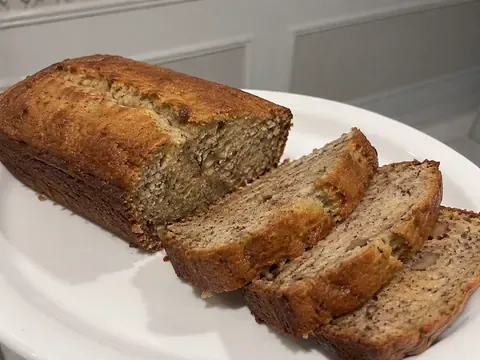
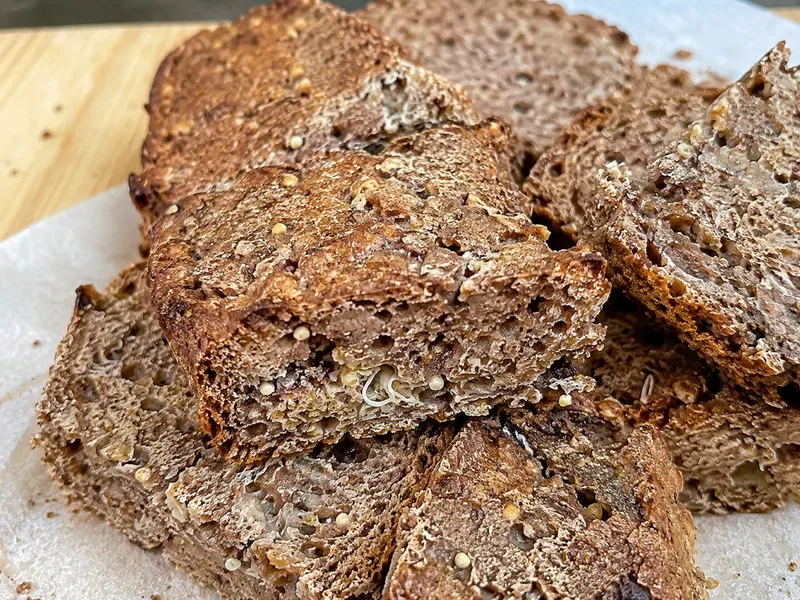
About this recipe
Making bread from actual sprouted grains sounds intimidating, but it is mostly just a waiting game. We are making a genuine Ezekiel-style loaf from scratch. You will be soaking and sprouting real wheat berries, spelt, barley, and lentils right on your kitchen counter. Grinding up the sprouted grains instead of using standard flour gives you an incredibly dense, chewy texture with a deep nutty flavor you simply cannot buy in a plastic bag. Yes, the sprouting process takes a couple of days. But the active hands-on work is minimal, and the loaf is ready in about 4425 minutes total.
Why You'll Love This Recipe
It has a deeply nutty, earthy flavor that makes standard sandwich bread taste like plain air.
The chunky texture is incredibly satisfying and holds up perfectly to heavy layers of peanut butter.
You get total control over the sprouting process without needing any sketchy commercial preservatives.
Ingredients
Sprouted grains and legumes
- 3/4 cup hard wheat berries
- 1/4 cup barley
- 1/4 cup spelt berries
- 1/4 cup millet
- 2 tbsp green lentils
- 2 tbsp dry great northern beans
- 2 tbsp dry kidney beans
- 2 tbsp dry pinto beans
- 6 cups water (for soaking and rinsing)
Bread dough
- 2 1/4 tsp active dry yeast (1 packet)
- 1/2 cup warm water (about 105°F to 110°F)
- 2 tbsp honey
- 2 tbsp olive oil
- 1 1/2 tsp kosher salt
- 1 cup whole wheat flour (plus more as needed)
- 1/2 cup bread flour (plus more as needed)
For the pan
- 1 tbsp olive oil (for greasing)
- 1 tbsp rolled oats or sesame seeds (optional topping)
Ingredient Notes
Hard wheat berries
You specifically want hard red or white wheat berries here. They sprout beautifully and provide the structural chew you need.
Dry beans and lentils
Make sure you are using dry, raw legumes. Canned beans will turn to complete mush in the food processor and ruin the bread.
Equipment
Mixing bowl
A large glass or ceramic bowl is perfect for soaking the grains.
Sprouting jar or colander
You need something that drains easily so the grains don't sit in stagnant water.
Food processor
Absolutely required for grinding the sprouted grains into a thick paste.
9x5-inch loaf pan
Standard size for bread baking.
Instructions
Soak the grains and legumes
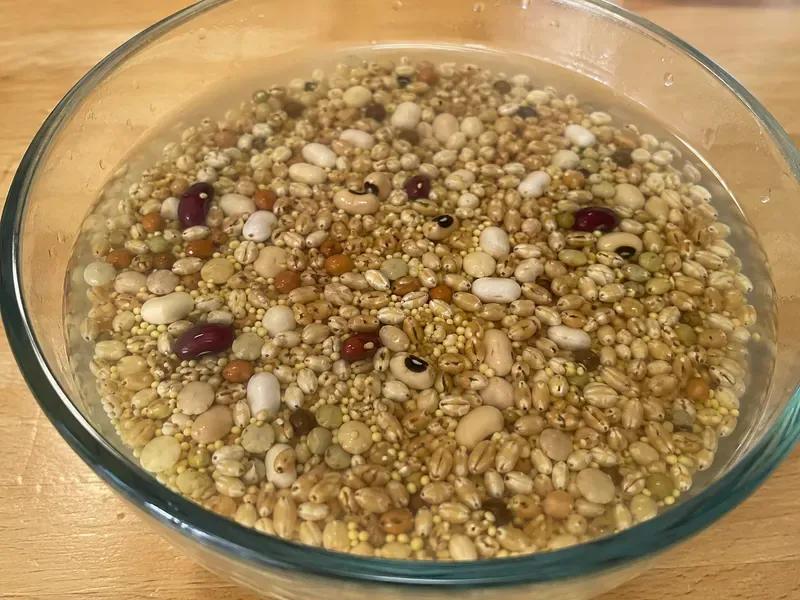
Toss the wheat berries, barley, spelt, millet, lentils, and all the beans into a really large bowl or jar. Cover them completely with a few inches of water and just let them sit undisturbed on the counter for 8 to 12 hours.
720 minute timer
Rinse and sprout
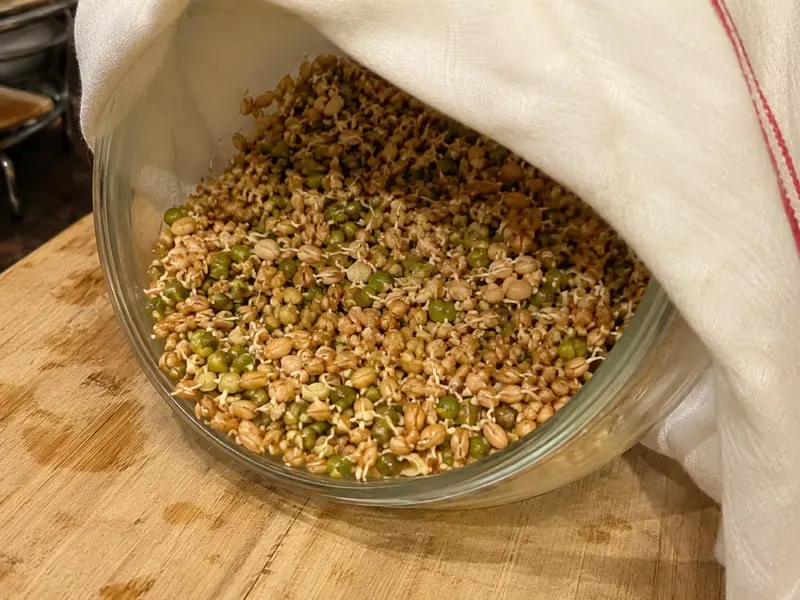
Drain the water completely and rinse the grain mixture thoroughly under cold water. Leave them in a colander or sprouting jar covered lightly with a breathable towel. You will need to rinse and drain them 2 to 3 times a day for the next 2 to 3 days until you see tiny little tails sprouting out.
Grind the sprouted mixture
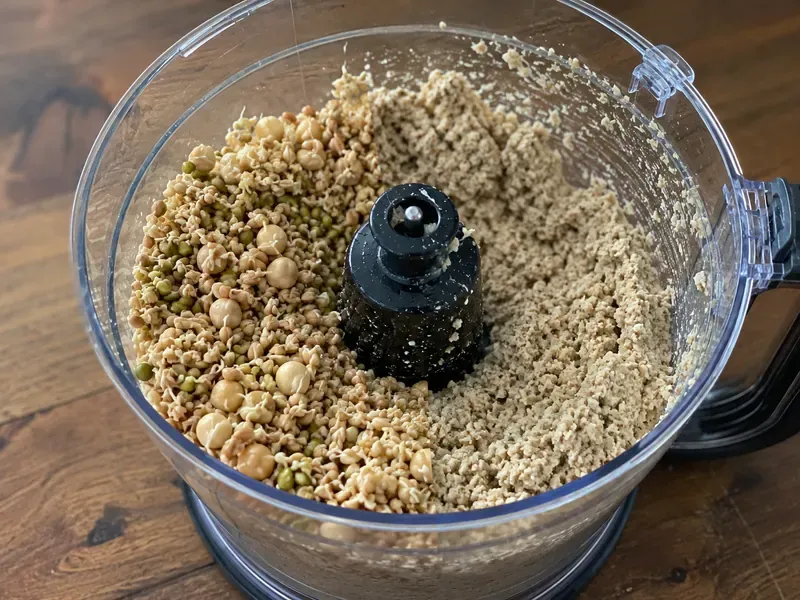
Drain the sprouted grains aggressively so you don't introduce excess water into your dough. Dump them into a food processor and pulse until they form a chunky, cohesive paste. Make sure to scrape down the sides of the bowl a few times.
Activate the yeast
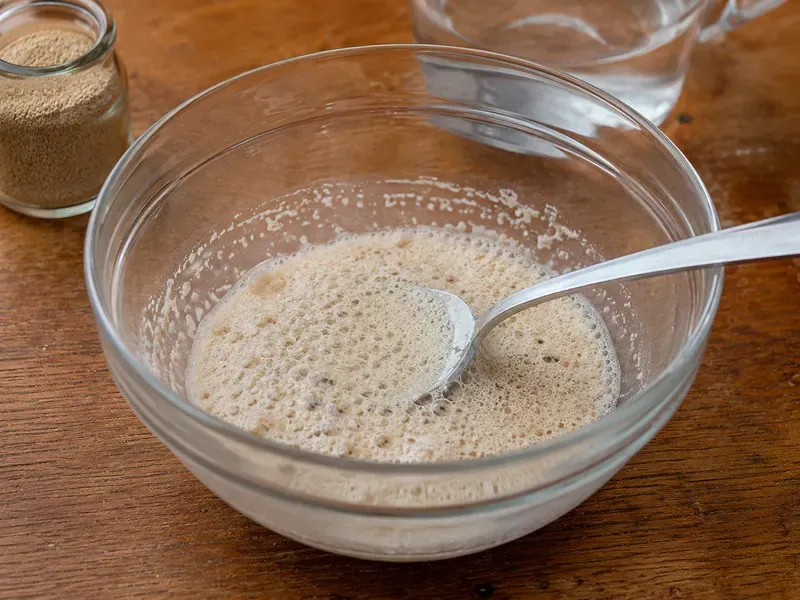
Grab a large mixing bowl and whisk together your warm water, active dry yeast, and honey. Let it hang out for 5 to 10 minutes until it looks thick and frothy on top.
10 minute timer
Mix the dough
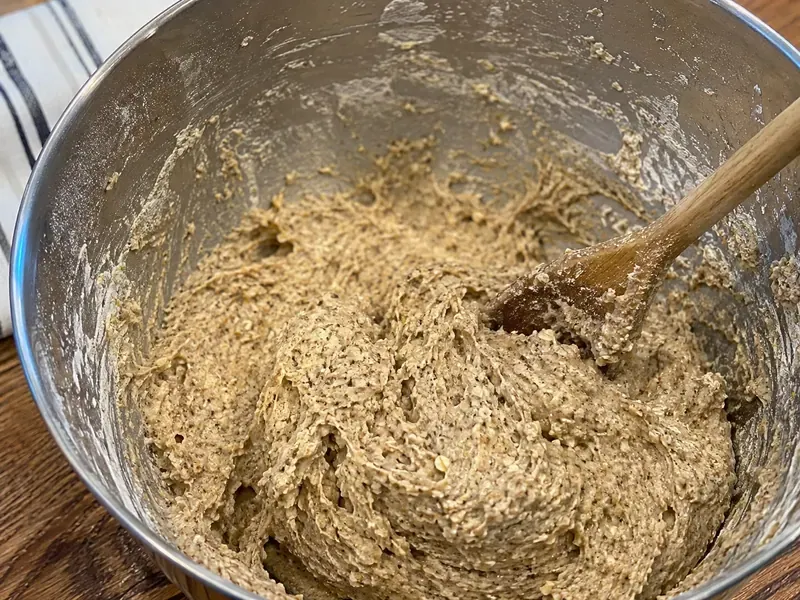
Add your ground sprouted grain paste, olive oil, salt, whole wheat flour, and bread flour directly into the foamy yeast mixture. Stir it together with a heavy wooden spoon until it forms a thick, slightly sticky shaggy dough.
Knead and shape
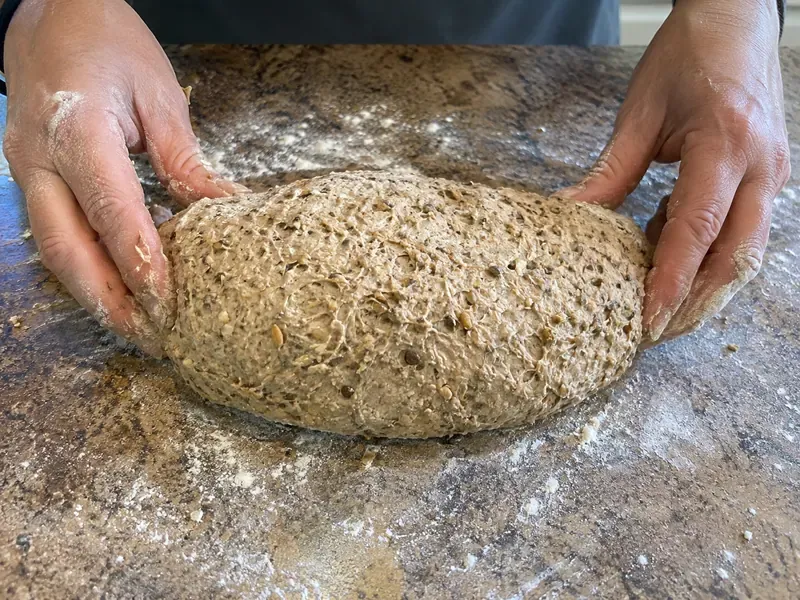
Turn the dough out onto a counter and knead it by hand for 5 to 7 minutes, dusting with just a tiny bit of extra flour if it sticks to your fingers too much. Shape it into a tight log and drop it right into a lightly greased 9x5-inch loaf pan.
7 minute timer
Let the loaf rise
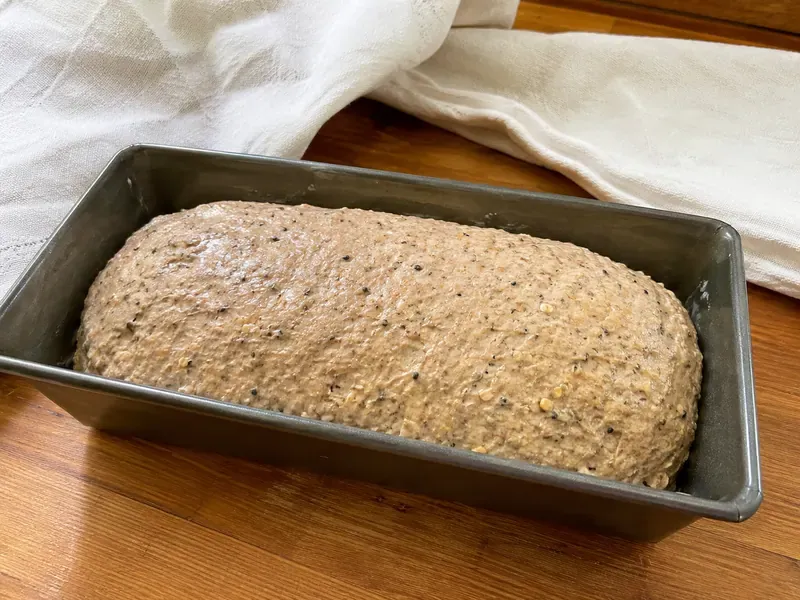
Cover the pan with a damp towel and let the dough rise in a warm, draft-free spot for 60 to 90 minutes. Don't panic if it doesn't double in size. This is an incredibly dense, heavy bread, so it will only puff up slightly above its original shape.
90 minute timer
Bake and cool
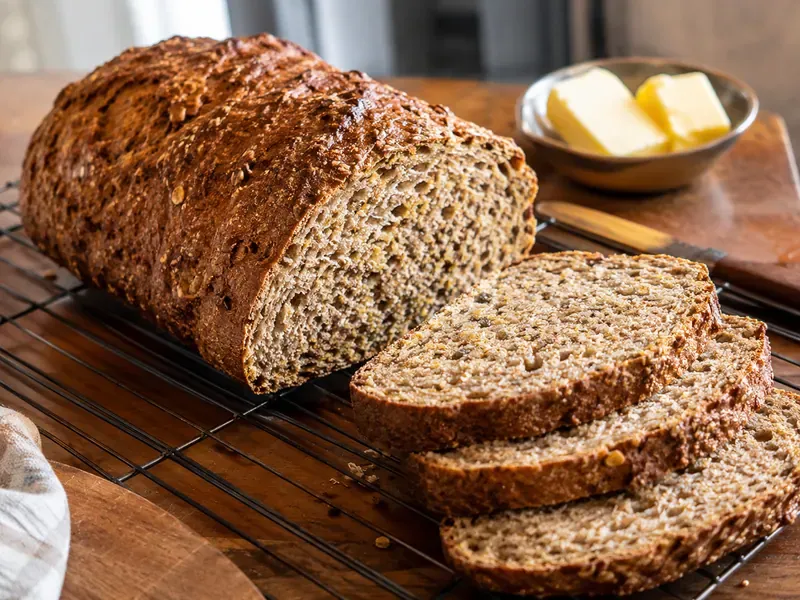
Sprinkle the top with rolled oats or sesame seeds if you want a little extra visual texture. Bake at 350°F (175°C) for 40 to 45 minutes until the top is deeply browned and the loaf sounds distinctly hollow when you tap the bottom. You must let it cool completely on a wire rack before slicing, otherwise the crumb will tear.
45 minute timer
Common Mistakes to Avoid
Leaving the sprouts too wet
If you don't drain the sprouts well after their final rinse, that extra water gets trapped in the food processor. This leaves you with a heavy, gummy loaf that never bakes through.
Over-sprouting
Stop sprouting once the little white tails are about the length of the grain itself. If they grow into actual green leaves, the grain becomes bitter.
Tips
- If your kitchen is cold during the winter, the sprouting process might take a full 3 days instead of 2.
- Do not skip the bread flour. The extra gluten is absolutely necessary to help hold the heavy, wet sprouted grains together.
Variations
Seed heavy
Fold a handful of raw sunflower seeds or pumpkin seeds into the dough during the very last minute of kneading.
Substitutions
- Swap the honey for real maple syrup or agave nectar if you prefer a different sweetness profile.
- If you cannot track down spelt berries at your grocery store, just substitute them with extra hard wheat berries.
What to Serve With It
Slice it thick, toast it in a skillet with butter until the edges get deeply crispy, and load it up with mashed avocado or a fried egg.
Make Ahead
Freeze the grain paste
You can freeze the ground sprouted grain paste in an airtight bag for up to a month before you are ready to actually mix and bake the bread.
Storage
Room temperature
Wrap the fully cooled loaf tightly in foil or plastic and keep it on the counter for up to 2 days.
Refrigerator
If your kitchen is humid or very warm, toss the loaf in the fridge where it will last up to 5 days without molding.
Freezer
Pre-slice the bread before freezing so you can grab exactly what you need. It toasts perfectly straight from the freezer for up to 3 months.
Recipe Notes
The total time looks crazy at first glance, but almost all of it is completely hands-off while the grains sprout on your counter.
Nutrition
- Serving Size
- 1 slice
- Calories
- 185
- Protein
- 7g
- Carbohydrates
- 34g
- Fat
- 3g
- Fiber
- 6g
- Sugar
- 3g
- Sodium
- 300mg
FAQ
Is this exactly like the Ezekiel bread from the grocery store?
Not exactly. Commercial sprouted breads use massive industrial extruders to create a uniform texture. Ours is a rustic, homemade take using the same classic grain and legume blend, so it has a chunkier, heartier bite.
Can I just use standard flour instead of sprouting grains?
Sprouting is the whole point! If you skip it, the whole raw grains and beans will be hard enough to break a tooth. If you want a quick loaf without the work, look for sprouted grain flour at the store instead.
Why didn't my bread rise very much in the pan?
Welcome to sprouted bread baking. The wet, heavy grain paste physically weighs down the yeast. A short, dense loaf is exactly what you should expect.
Recipe Card
Ezekiel Bread Recipe
A deeply hearty homemade sprouted grain bread made with actual sprouted wheat, barley, lentils, and beans.
- Prep
- 60 min
- Cook
- 45 min
- Total
- 4425 min
- Servings
- 12
- Category
- Bread Recipes
- Cuisine
- American
- Difficulty
- Medium
- Cost
- Budget-friendly
Ingredients
Sprouted grains and legumes
- 3/4 cup hard wheat berries
- 1/4 cup barley
- 1/4 cup spelt berries
- 1/4 cup millet
- 2 tbsp green lentils
- 2 tbsp dry great northern beans
- 2 tbsp dry kidney beans
- 2 tbsp dry pinto beans
- 6 cups water (for soaking and rinsing)
Bread dough
- 2 1/4 tsp active dry yeast (1 packet)
- 1/2 cup warm water (about 105°F to 110°F)
- 2 tbsp honey
- 2 tbsp olive oil
- 1 1/2 tsp kosher salt
- 1 cup whole wheat flour (plus more as needed)
- 1/2 cup bread flour (plus more as needed)
For the pan
- 1 tbsp olive oil (for greasing)
- 1 tbsp rolled oats or sesame seeds (optional topping)
Instructions
- Soak the grains and legumes: Toss the wheat berries, barley, spelt, millet, lentils, and all the beans into a really large bowl or jar. Cover them completely with a few inches of water and just let them sit undisturbed on the counter for 8 to 12 hours.
- Rinse and sprout: Drain the water completely and rinse the grain mixture thoroughly under cold water. Leave them in a colander or sprouting jar covered lightly with a breathable towel. You will need to rinse and drain them 2 to 3 times a day for the next 2 to 3 days until you see tiny little tails sprouting out.
- Grind the sprouted mixture: Drain the sprouted grains aggressively so you don't introduce excess water into your dough. Dump them into a food processor and pulse until they form a chunky, cohesive paste. Make sure to scrape down the sides of the bowl a few times.
- Activate the yeast: Grab a large mixing bowl and whisk together your warm water, active dry yeast, and honey. Let it hang out for 5 to 10 minutes until it looks thick and frothy on top.
- Mix the dough: Add your ground sprouted grain paste, olive oil, salt, whole wheat flour, and bread flour directly into the foamy yeast mixture. Stir it together with a heavy wooden spoon until it forms a thick, slightly sticky shaggy dough.
- Knead and shape: Turn the dough out onto a counter and knead it by hand for 5 to 7 minutes, dusting with just a tiny bit of extra flour if it sticks to your fingers too much. Shape it into a tight log and drop it right into a lightly greased 9x5-inch loaf pan.
- Let the loaf rise: Cover the pan with a damp towel and let the dough rise in a warm, draft-free spot for 60 to 90 minutes. Don't panic if it doesn't double in size. This is an incredibly dense, heavy bread, so it will only puff up slightly above its original shape.
- Bake and cool: Sprinkle the top with rolled oats or sesame seeds if you want a little extra visual texture. Bake at 350°F (175°C) for 40 to 45 minutes until the top is deeply browned and the loaf sounds distinctly hollow when you tap the bottom. You must let it cool completely on a wire rack before slicing, otherwise the crumb will tear.
Reviews
Have you tried this recipe? Be the first to leave a review.